
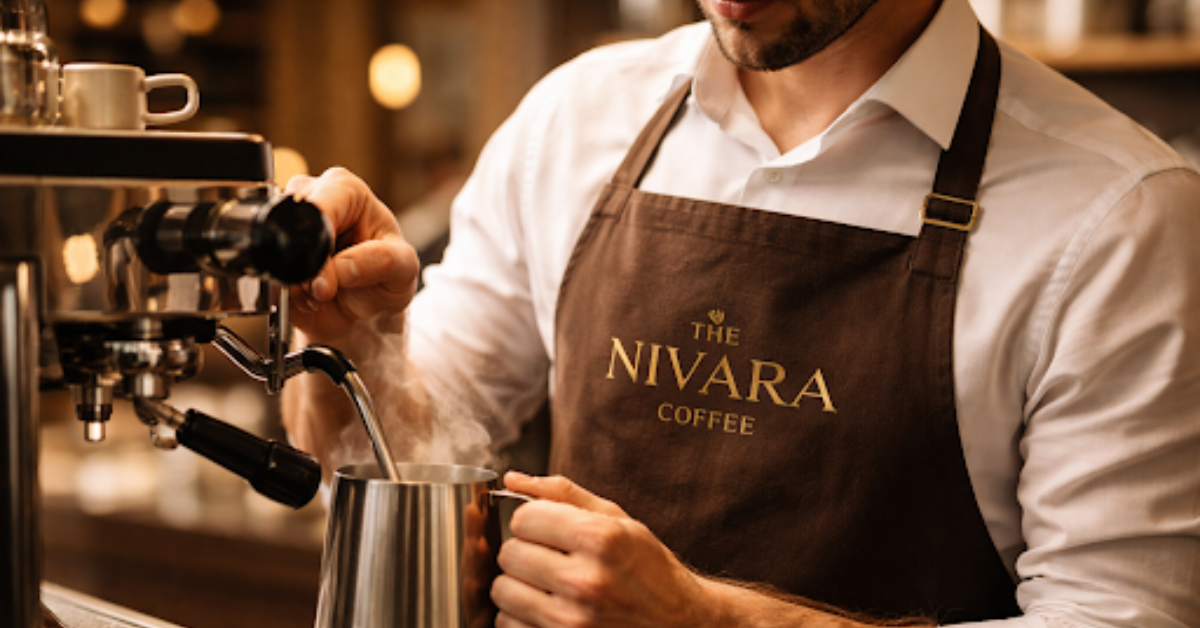
India’s coffee culture has changed beyond all recognition in the past decade. Coffee shops are now the default place to meet up with friends, catch up on some work, or just enjoy a daily ritual among millions across metro cities and Tier-2 towns. It comes as no surprise that this sudden boom has left many aspirant entrepreneurs wondering if coffee franchises are profitable.
The answer is a short yes, if you run your business the right way. However, like any business venture in India, your profits depend on several important factors. In this blog, we’ll take a close look at the economics of running a coffee franchise in India, how some succeed where others falter, and what you can do to ensure your success.
Understanding the Indian Coffee Franchise Market
India ranks among the world’s top six coffee producers but tea was king for generations. That’s no longer true. Chai still sells, but coffee has caught fire. Just check the numbers. One estimate shows the Indian coffee shop market growing at a CAGR exceeding 11% through 2030. Three forces are fueling growth rapid urbanization, increased disposable incomes, and a large population of young aspirational consumers.
The appeal of coffee shop franchises? Brand awareness, established systems, an existing customer base. When you open your own independent cafe, you’re starting from scratch. You have to develop your brand. Your menu. Your suppliers. And you have to prove to customers that you’ll be there tomorrow. Franchises allow you to shorten that learning curve drastically.
The Economics of a Coffee Franchise: What the Numbers Say
Profitability in coffee franchising is not a myth — it is a formula. Here is how the financials typically look for a mid-scale coffee franchise in India:
Average Revenue Potential
A well-located coffee cafe serving 80–150 customers per day can generate monthly revenues ranging from ₹3 lakh to ₹12 lakh depending on the city, format, menu pricing, and footfall. Premium locations in metros tend to have higher revenues but also higher operating costs.
Gross Margins
Coffee as a product enjoys excellent margins. The cost of raw ingredients (milk, coffee beans, syrups, packaging) typically accounts for 25–35% of the selling price. This means a cup sold at ₹100 can have a raw material cost of just ₹25–35, leaving room for operational expenses and profit.
Key Factors That Determine Coffee Franchise Profitability
Not every coffee franchise will be equally profitable. The following elements play a decisive role in determining how quickly you break even and how much you ultimately earn:
- Location Quality: A cafe near a college campus, tech park, or busy commercial street will consistently outperform one tucked in a low-footfall area. Location is arguably the single biggest determinant of daily sales volume.
- Initial Investment vs. ROI Potential: A lower franchise fee does not always mean lower returns. Some compact, well-designed formats with efficient menus deliver faster ROI than overbuilt, high-investment models. Always analyze the investment-to-expected-return ratio before signing any franchise agreement.
- Menu Diversity and Average Order Value (AOV): A franchise that sells only coffee will earn far less per customer than one that pairs beverages with snacks, sandwiches, or desserts. Increasing the AOV from ₹80 to ₹180 can dramatically change monthly revenue without needing more customers.
- Franchisor Support Quality: Brands that offer end-to-end support — from staff training and equipment setup to marketing assistance and supply chain management — give franchisees a significant operational edge, especially in the first year.
- Operational Efficiency: Labour costs, wastage management, energy consumption, and inventory discipline directly impact net margins. Even a 5% improvement in waste reduction can translate to meaningful savings over a year.
- Brand Reputation and Customer Loyalty: Customers in India are increasingly brand-conscious. A franchise with a strong local reputation or growing national presence enjoys lower customer acquisition costs and higher repeat business.
Low Investment Coffee Franchise vs. Premium Franchise: Which is More Profitable?
One of the most common dilemmas for first-time franchise investors is choosing between a premium high-investment brand and a more affordable, emerging brand. Here is an honest comparison:
- Premium Franchise Brands (Investment: ₹50 Lakh+): These come with strong brand recall and established customer bases. However, high setup costs, strict territory restrictions, and heavy royalty fees can push the break-even period to 3–4 years. Margins are often squeezed by rigid pricing models.
- Emerging Affordable Franchise Brands (Investment: ₹10–25 Lakh): These are increasingly competitive with well-crafted menus and modern cafe aesthetics. With lower overhead, faster break-even periods (often 12–24 months), and higher support ratios, they are becoming the preferred choice for first-time entrepreneurs in Tier-1 and Tier-2 cities alike.
Common Reasons Coffee Franchises Fail (And How to Avoid Them)
Understanding failure points is as important as understanding success factors. Here are the most frequent reasons coffee franchise businesses underperform:
- Poor location selection driven by rent savings rather than footfall analysis
- Underestimating working capital needs in the first six months
- Lack of marketing support or over-reliance on walk-in traffic alone
- Choosing a franchise brand solely based on fees without evaluating the support ecosystem
- Inconsistent service quality due to inadequate staff training
- Ignoring local tastes and food preferences in menu planning
The Role of Standardization in Franchise Profitability
One of the core advantages of a franchise model over an independent cafe is standardization. When recipes, processes, and customer experiences are consistent across outlets, franchisees benefit from reduced decision fatigue, better quality control, and stronger brand equity over time. Standardized operations also make it easier to train new staff, which reduces turnover costs a significant hidden expense in the cafe business.
Franchises with robust Standard Operating Procedures (SOPs) also adapt better during challenging periods. Whether it’s managing supply disruptions or seasonal demand fluctuations, a well-documented playbook helps franchise owners navigate uncertainty with greater confidence.
How The Nivara Coffee Guides Aspiring Franchise Partners Toward Profitability
When looking for cafe franchise in India, you will come across many options. While reviewing your list, consider checking out. The Nivara Coffee is India’s most reliable low cost premium coffee brand. Behind every successful beverage company is an excellent franchise model and The Nivara Coffee has developed just that.
Nivara Coffee Franchise allows aspiring cafe entrepreneurs to invest in a low cost cafe setup.
The cafe formats that they provide can be scaled up or down depending on the city you are in, the rental you have, and the target audience you want to reach. The sizes can range from small kiosk style cafes to large sit down cafes. Setting up your cafe has never been easier with their support in location analysis, store design, crafting menu, training barista’s, and digital marketing. Owning your own cafe has always been a dream for many and with The Nivara Coffee franchise you can achieve that without any prior cafe experience and maintain consistency with your customers.
Profitability Timeline: What to Realistically Expect
One of the most important questions investors ask is: how long before I start making money? Here is a general profitability timeline for a coffee franchise in India:
- Month 1–3: Setup, soft launch, building local awareness. Expect low footfall and below-target revenues. This phase is about establishing systems and gathering customer feedback.
- Month 4–6: Gradual revenue growth as word-of-mouth builds. Repeat customers start forming habits. Marketing investment starts yielding returns.
- Month 7–12: Most well-located franchises with proper execution reach operational profitability within this window, meaning monthly revenues comfortably exceed monthly expenses.
- Full Investment Recovery (Break-Even): Typically between 18 and 30 months for affordable franchise models with sound fundamentals. Premium investment models can take 36–48 months.
Is a Coffee Franchise Right for You? Questions to Ask Before Investing
Before signing a franchise agreement, every serious investor should honestly answer the following:
Do I have a suitable location in mind, or am I open to the franchisor’s site recommendations?
Am I prepared to be actively involved in day-to-day operations, at least initially?
Do I have 12 months of working capital beyond the initial franchise investment?
Have I evaluated the franchisor’s support system and spoken with existing franchisees?
Does the brand’s identity align with the community and customer base I want to serve?
If you can answer these questions confidently, you are significantly better prepared than most first-time franchise investors.
Conclusion: Profitable, But Only With the Right Partner
Running a coffee franchise in India can be extremely lucrative if you go in with your eyes wide open and your discipline intact. If you back your decision with research and partner with the right brand. Growth drivers (increasing consumption, young population, robust aspirational demand) in the market are healthy. So what tips the scale between success and failure of a coffee franchise? Preparation, location and support from your franchisor.
If you are a novice entrepreneur based in a Tier-2 city or an experienced business owner looking to foray into F&B, coffee franchising can be a win-win, scalable business opportunity for you. Only if you pick a brand that’s built for performance, not just collecting franchise fees.
Frequently Asked Questions
What is the typical profit margin for a coffee franchise?
Net profit margins in coffee franchises typically range from 15% to 30% after accounting for all expenses including rent, staff, raw materials, and royalties. Higher footfall locations and efficient operations tend to push margins toward the upper end of this range.
How long does it take to recover the investment in a coffee franchise?
For affordable, well-supported franchise models, break-even is typically achieved within 18 to 30 months. Premium investment models with higher fixed costs may take 36 to 48 months. Location quality and active owner involvement are the biggest variables in this timeline.
Is a coffee franchise a good business in Tier-2 and Tier-3 cities in India?
Absolutely. Tier-2 and Tier-3 cities offer lower real estate costs, less competition, and a rapidly growing aspirational middle class. With the right brand and product positioning, coffee franchises in smaller cities are increasingly outperforming saturated metro locations on ROI metrics.
What should I look for in a coffee franchise brand before investing?
Evaluate the brand’s franchise support structure, training quality, supply chain reliability, marketing assistance, and existing franchisee satisfaction. A brand that offers scalable formats, standardized operations, and a proven track record across different market types is far more valuable than one with only a well-known logo.

The Nivara Coffee is a modern café brand focused on creating relaxing spaces where people can enjoy great coffee, delicious food, and quality hospitality. Built around comfort, convenience, and community, The Nivara Coffee offers a refreshing experience for customers looking to unwind, work, or spend quality time with friends and family.
With a growing presence across India, the brand is also expanding through franchise opportunities, helping entrepreneurs build profitable café businesses backed by strong operational support, innovative concepts, and customer-focused service.