When you order a glass of cold coffee, it could mean a few things. Maybe it’s creamy and blended or made with espresso over ice cubes. It could be brewed slowly overnight.
These drinks will reach your table cold, but the processes they undergo beforehand can vary.
At The Nivara Coffee, we aim to make great coffee easy to love. Understanding your order can be a good place to start.
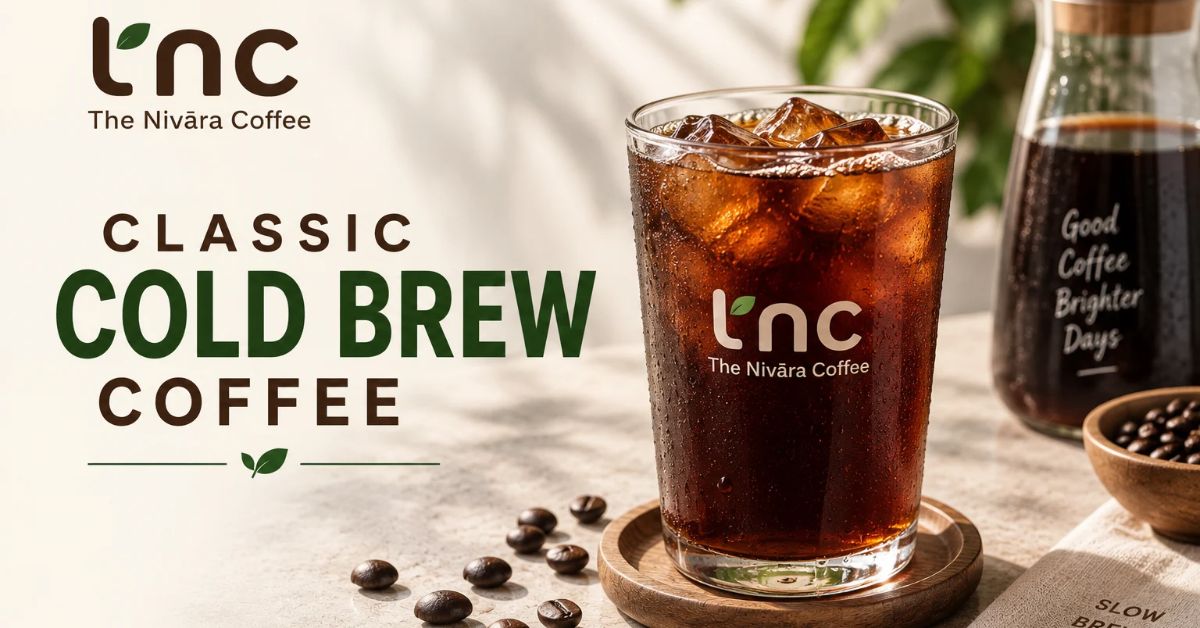
If you enjoy smooth black coffee, or want something you can make ahead, classic cold brew coffee is worth getting familiar with. Here’s what it is, what you can expect from the taste, and how to make it for yourself at home.
What Is Classic Cold Brew Coffee?
Cold brew coffee is coffee grounds steeped in cool water for many hours, then filtered to remove the grounds.
Recipes using immersion brew methods typically take around 12–24 hours, depending on variables like temperature, grind size, and technique.
“Classic” cold brew coffee usually refers to the unflavoured version: coffee brewed cold, then served black (often over ice).
You’ll notice we didn’t qualify “classic” with mentions of milk or sugar. That’s because it isn’t a separate set of brewing standards – cafés may use the terminology differently.
Cold brew can be made to drinking strength, or as a concentrate that will require dilution. The basic ratios are coffee and water.
Coffee researchers have examined cold brewing to understand this prolonged, cold extraction method. Read more about cold brew research.
Milk, sugar, and flavoured syrups are not necessary to make the drink. These can be added to taste.
What Does Cold Brew Coffee Taste Like?
Cold brew is often rounded and smooth, with natural sweetness that makes drinking black coffee more approachable.
Flavour notes will change depending on the beans and roast level, but you may pick up hints of:
- Chocolate or cocoa: A rich, rounded taste.
- Nutty flavours: Often reminiscent of almonds or hazelnuts.
- Sweetness like caramel: Natural flavour, not added sugar.
- Fruit flavours: Some coffees bring notes of berries or dried fruit.
- Body: A fuller mouthfeel, especially with less added water.
Your coffee choice still matters. Brewing cold won’t make any coffee taste the same, and very dark roast coffee can taste bitter or even smoky.
The way you filter also affects your cup. Paper filtering creates a cleaner taste, while allowing more coffee oils and fine particles through can create a stronger body. Learn more about brewing and filtration.
If it’s too strong for your first taste, try adding a bit of water. You may just have made a concentrate!
Cold Brew vs Iced Coffee vs Cold Coffee
Let’s break down how each of these coffees is prepared first:
| Drink | Preparation | Typical serving style |
|---|---|---|
| Cold brew | Ground coffee steeped in cool water, then filtered | Black or with optional milk |
| Iced coffee | Coffee brewed hot, then chilled or brewed directly onto ice | Black, sweetened or with milk |
| Iced Americano | Espresso combined with water and ice | Usually black |
| Indian café-style cold coffee | Brewed or instant coffee blended with chilled milk, often sugar and ice | Creamy and frothy. |
Our existing guide to cold coffee explains the milk-based café-style beverage. If you’re interested in the espresso-based drink, check out our guide to iced Americanos.
When in doubt, don’t be afraid to ask! Cold coffee can be a broad description depending on the café.
Benefits of Classic Cold Brew Coffee
Why might you choose cold brew? The benefits come from both the coffee inside and cold brew’s ability to be made beforehand.
1. It Can Help You Feel More Alert
If made with caffeinated coffee, cold brew contains caffeine. Caffeine is a stimulant that can make you feel more awake by acting on your central nervous system.
Your body’s response to caffeine depends on how much you consume and your personal sensitivity. A smoother taste does not mean less caffeine!
Read about caffeine from MedlinePlus.
2. You Decide if It’s Sweet or Savoury
The plain cold brew recipe contains no added sugar, creamer, or syrup. Serve it black or add only as much milk or sweetness as you like.
If you enjoy cold drinks but don’t always want dessert-in-a-cup coffee, that level of control can be nice.
3. Brewing Ahead Means Busy Mornings Are Easy
After you brew and filter your batch, serving your coffee takes seconds. Grab the container, dilute to your preferred strength if needed, and add ice.
For someone who likes to start their day with coffee, having it ready to grab and go can be part of a helpful routine.
4. It Doesn’t Have to Include Dairy
Classic cold brew served black needs no milk. If you want a creamy cold brew, you can add dairy milk or a non-dairy substitute to your cup.
Start with just a splash so you can see how it changes the taste.
5. Coffee Contains Antioxidants
Coffee contains compounds that may act as antioxidants. That doesn’t mean cold brew is automatically healthier than hot coffee.
One study comparing brew methods found higher antioxidant activity in hot-brewed coffee samples. Read research on coffee’s antioxidant activity.
Enjoy cold brew because you like it and want it as part of your routine, not because you expect certain health benefits.
Is Cold Brew Less Acidic?
Cold brew may taste less “ bitey,” but flavour and measured acidity are two different things.
The study mentioned above measured similar pH levels in both hot and cold coffee. pH is a measure of acidity on a scale from 0-14, with lower numbers more acidic. Hot coffee had higher total titratable acids in this study. Learn more about coffee acidity.
Arguments like “ cold brew coffee has no acid” are inaccurate.
Mild flavour doesn’t guarantee coffee will agree with your stomach either. Caffeine may cause heartburn in some people. Learn more from MedlinePlus.
How to Make Cold Brew Coffee at Home
You don’t need expensive equipment. Start with a clean jar or container, plus coffee and water.
Below is a method for making concentrate with a 1:8 coffee-to-water ratio by weight.
Ingredients and equipment:
- 100 g medium- coarsely ground coffee
- 800 ml drinking water
- One clean, food-safe container with a lid that can hold both ingredients
- Strainer and paper coffee filter
Method:
- Place grounds in your container.
- Add water and gently stir to saturate all of the grounds.
- Cover and place in the refrigerator to brew. Start with about 14 hours of brewing time.
- Filter out the grounds, then filter the resulting liquid through a paper filter.
- Dilute to taste when serving. Begin with equal parts cold water and concentrate.
- Add ice, then enjoy!
We based this beginner method on Counter Culture’s recommendations for brew ratio, refrigerated brewing time, and serving dilution. Learn more about preparing cold brew coffee.
Cold brew ratios can look intimidating because the coffee grounds absorb some of the water. You won’t finish with 900 ml of liquid.
Adjusting Your Cold Brew Recipe
Now that you’ve made your first batch, you can tweak the recipe.
Write down what coffee you used, how much coffee and water, how long you brewed, and how you diluted it when serving.
Change one variable at a time.
| What you notice | What to try |
|---|---|
| The taste is too strong for your liking. | Try diluting with more water. |
| It tastes too weak. | Increase your coffee ratio, or dilute with less water. |
| The coffee has a gritty texture. | Improve your filtration method. |
| Flavour is lacking. | Use fresher beans or a different coffee variety. |
| Enjoyable black, but disappears in milk. | Try less milk or a higher ratio when serving. |
Do This At Once: Swap out your coffee beans. Make a smaller batch if you don’t want to guess how the variables interact.
Does Cold Brew Coffee Have More Caffeine?
Generic caffeine numbers don’t exist for cold brew coffee. Type of bean, coffee amount, extraction rate, dilution, and serving size all play into your final cup.
Ready-to-drink cold brew and concentrate can be confusing. Dilution expectations are not always obvious from the packaging. Check if your bottle needs to be diluted before serving.
Remember that adding water dilutes the caffeine concentration – it doesn’t remove caffeine from your serving.
If you drink the entire diluted cup, you consume all of the caffeine in that original serving.
The FDA advises checking the information provided by your coffee producer, as caffeine levels can vary between coffees. Their daily recommendation of 400 mg covers most healthy adults, but sensitivity and health conditions change this number for some people. Learn more about caffeine from the FDA.
Storing Your Homemade Cold Brew Coffee
Store your filtered cold brew in a clean jar or container with a lid, in the fridge. Make enough cold brew that you can finish within a few days.
Add milk or other perishables to individual servings instead of the whole batch. Label your stored cold brew with the date it was brewed, and try not to leave it out while you serve yourself multiple cups.
Exact shelf life will change based on how you prepare and store your brew. Commercial cold brew may also undergo processing that you don’t do at home. Check the label for bottled cold brew coffees. Read about cold brew storage research.
Finding Cold Brew Coffee You’ll Love at The Nivara Coffee
Knowledge is power: now you can walk into a café and actually describe what you want.
Black coffee with a rounded flavour? Coffee with less milk in it? Something chilled without tons of added sugar?
When you stop by The Nivara Coffee, we help make quality coffee easy to love. Check out the menu at your local café and ask your barista about their cold coffee options.
Understanding your preferences can help make that conversation go smoothly – and help you find a cup you’ll want to order again.
FAQs
Can I make cold brew with instant coffee?
Instant coffee mixed with cold water is instant coffee. Cold brew starts with ground roasted coffee beans, which are steeped, then filtered.
Does cold brew coffee contain milk?
A classic cold brew recipe contains coffee and water. Milk is not required, and many people add it when serving.
Can I make cold brew in a French press?
Yes, you can! Use it as your steeping container. Press gently to help separate the grounds from the water. If you prefer little to no sediment, filter your cold brew again using paper.
Is cold brew coffee stronger than espresso?
“Stronger” could mean more intense flavour or more caffeine. Espresso is brewed into a concentrated form, then served in small portions. Cold brew can be made with varying levels of concentration, then served in whatever size cup you want. Comparing the names alone doesn’t tell you which has more caffeine.
What’s the difference between classic cold brew and nitro cold brew?
Nitro cold brew is infused with nitrogen. This creates tiny bubbles that give the drink a creamy texture and a foamy head. Classic cold brew goes through no nitrogen infusion. Nitrogen does not guarantee that milk has been added. Nitrogen in coffee from the Specialty Coffee Association

The Nivara Coffee is a modern café brand focused on creating relaxing spaces where people can enjoy great coffee, delicious food, and quality hospitality. Built around comfort, convenience, and community, The Nivara Coffee offers a refreshing experience for customers looking to unwind, work, or spend quality time with friends and family.
With a growing presence across India, the brand is also expanding through franchise opportunities, helping entrepreneurs build profitable café businesses backed by strong operational support, innovative concepts, and customer-focused service.